

Skip to content
INTEGRO HEALTH · LEO MEYER

A More Complete Way to Understand Health & Development

Helping children and adults move from complex, persistent difficulties towards a clearer understanding and a practical way forward.

After thirty years of clinical practice, Leo Meyer has developed an integrated approach that connects developmental, learning, behavioural and chronic health difficulties that are often considered separately.
.integro-video{background:#1E2D3E;padding:70px 24px;text-align:center}.integro-video .inner{max-width:900px;margin:0 auto}.integro-video .eyebrow{color:#A8C0D6;font-size:12px;letter-spacing:3px;text-transform:uppercase;margin-bottom:12px}.integro-video h2{font-family:Georgia,serif;font-size:clamp(30px,4vw,44px);font-weight:400;color:#fff;margin:0 0 18px}.integro-video p{color:#B8C7D5;max-width:650px;margin:0 auto 32px;line-height:1.8}.integro-video .video-wrapper{position:relative;width:100%;aspect-ratio:16/9;overflow:hidden;border-radius:8px;background:#111820;box-shadow:0 20px 50px rgba(0,0,0,.2)}.integro-video iframe{position:absolute;inset:0;width:100%;height:100%;border:0}@media(max-width:600px){.integro-video{padding:45px 18px}}
IN LEO'S OWN WORDS

Understanding the Whole Picture

Discover the thinking behind Integro Health and how an integrated approach can help make sense of complex developmental and health difficulties.

THE CONSULTANCY

A More Complete Way to Understand Complex Difficulties

After thirty years of clinical practice specialising in children and families, Leo Meyer is launching a specialist consultancy service offering comprehensive assessment, explanation and treatment roadmaps for individuals experiencing developmental, learning, behavioural and chronic health difficulties.

The service is built around a simple but powerful insight: many individuals experiencing these difficulties are not dealing with isolated conditions requiring isolated treatments. Their symptoms may reflect multiple interconnected factors — neurological, developmental, postural, respiratory, metabolic and environmental.

LOOKING BEYOND ISOLATED SYMPTOMS

The Difficulties May Be Connected

Without understanding the wider pattern, families and individuals are often directed from one specialist to the next, each addressing a single dimension of a multidimensional problem.

THE OVERLAP MATTERS

When Difficulties Do Not Fit Neatly Into One Category

Many children present with difficulties across more than one area of development, learning, behaviour and health.

Learning difficulties may exist alongside anxiety, sensory processing challenges, sleep problems or persistent physical symptoms.

It is precisely this overlap that the consultancy is designed to explore. Rather than treating each concern as a separate issue, the assessment considers whether common underlying patterns may be contributing to several difficulties.

AN INTEGRATED APPROACH

Bringing the Different Pieces Together

Most specialist services assess one dimension of an individual's difficulties and recommend interventions within their own discipline.

A speech therapist addresses language. A paediatric physiotherapist addresses movement. An educational psychologist addresses learning. A GP addresses recurrent infections.

Each assessment provides valuable information, but the individual or family can be left trying to coordinate between practitioners without anyone holding the whole picture.

Leo Meyer's consultancy starts from that whole picture.

ONE ASSESSMENT. MULTIPLE PERSPECTIVES.

Six Areas of Comprehensive Assessment

The assessment brings together several complementary perspectives to develop a more complete understanding of the individual.

01

Structural & Neurological Function

Osteopathic assessment of structural, postural and neurological function.

02

Neuro-Motor Development

Neuro-motor developmental assessment informed by specialist INPP training.

03

Breathing & Swallowing

Orofacial myofunctional assessment of breathing, swallowing and upper airway function.

04

Nervous System & Stress

Evaluation of the individual's nervous system state and stress response patterns.

05

Developmental History

Review of developmental history, birth history and family health patterns.

06

Sensory Environment

Assessment of the individual's sensory environment and daily activity patterns.

AFTER THE ASSESSMENT

Two Things That Are Rarely Provided Together

The aim is not simply to identify individual difficulties, but to help make sense of how they fit together and what should happen next.

01

A Clear Explanation

An explanation of what may be underlying the difficulties — connecting symptoms that previously seemed unrelated and helping make sense of why earlier interventions may have produced limited or temporary improvement.

02

A Practical Treatment Roadmap

A prioritised sequence of interventions identifying which issues to address first, which practitioners to work with, and what environmental and lifestyle changes are most likely to make a sustainable difference.

03

Treatment Where Appropriate

Where appropriate, Leo Meyer will provide hands-on osteopathic treatment as part of this roadmap, integrating treatment into the wider plan rather than approaching it in isolation.

THE CLINICAL FRAMEWORK

A Framework Shaped by Thirty Years of Clinical Observation

Leo Meyer's clinical approach is informed by thirty years of observation across multiple settings, and by a framework developed through both clinical practice and independent research.

Central to this framework is the recognition that many difficulties children present with — whether developmental, learning, behavioural or health-related — may reflect a common underlying pattern: a nervous system that has been pushed into a chronic conservation state by the conditions of modern life.

This proposed conservation state is a low-grade protective physiological configuration that may affect development, bodily regulation and the ability to engage with learning, social interaction and physical activity.

The framework aims to connect overlapping difficulties and identify interventions that address contributing patterns rather than symptoms alone.

.integro-book-feature{background:#1E2D3E;color:#fff;padding:clamp(65px,8vw,110px) 24px;overflow:hidden;position:relative}.integro-book-feature *{box-sizing:border-box}.integro-book-feature:before{content:'';position:absolute;width:550px;height:550px;border:1px solid rgba(255,255,255,.06);border-radius:50%;right:-150px;top:-200px;pointer-events:none}.integro-book-feature .ib-inner{max-width:1150px;margin:auto;display:grid;grid-template-columns:minmax(0,1.3fr) minmax(0,.7fr);gap:clamp(40px,7vw,100px);align-items:center;position:relative;z-index:1}.integro-book-feature .ib-eyebrow{display:flex;align-items:center;gap:15px;font-size:11px;font-weight:600;letter-spacing:3px;color:#A8C0D6;text-transform:uppercase;margin-bottom:30px}.integro-book-feature .ib-eyebrow:before{content:'';width:35px;height:1px;background:#A8C0D6}.integro-book-feature h2{font-family:Georgia,serif;font-size:clamp(39px,5vw,68px);font-weight:400;line-height:1.08;letter-spacing:-1.5px;color:#fff;margin:0 0 20px}.integro-book-feature h2 em{font-weight:400;color:#A8C0D6}.integro-book-feature .ib-subtitle{font-family:Georgia,serif;font-size:clamp(20px,2.2vw,29px);line-height:1.4;color:#D4E2EE;font-style:italic;margin-bottom:30px}.integro-book-feature .ib-divider{height:1px;width:65px;background:#6B8FAF;margin-bottom:28px}.integro-book-feature .ib-description{font-size:15px;line-height:1.9;color:#B5C3D0;max-width:570px;margin:0 0 32px}.integro-book-feature .ib-status{display:inline-flex;align-items:center;gap:12px;border:1px solid rgba(168,192,214,.35);padding:13px 20px;color:#D4E2EE;font-size:12px;letter-spacing:1.5px;text-transform:uppercase}.integro-book-feature .ib-status:before{content:'';width:7px;height:7px;border-radius:50%;background:#A8C0D6}.integro-book-feature .ib-visual{display:flex;justify-content:center;align-items:center;perspective:1000px}.integro-book-feature .ib-cover{width:min(100%,290px);aspect-ratio:2/3;background:linear-gradient(145deg,#536D88 0%,#2C3E54 45%,#101B28 100%);padding:38px 28px;display:flex;flex-direction:column;justify-content:space-between;border-left:9px solid #172434;box-shadow:25px 30px 55px rgba(0,0,0,.35);transform:rotate(-5deg);transition:transform .4s}.integro-book-feature .ib-cover:hover{transform:rotate(0deg)}.integro-book-feature .ib-cover-top{font-size:11px;letter-spacing:3px;color:#C8D9E8;text-transform:uppercase}.integro-book-feature .ib-cover-title{font-family:Georgia,serif;font-size:clamp(48px,5vw,70px);line-height:1;color:#fff;font-weight:400}.integro-book-feature .ib-cover-line{height:2px;width:45px;background:#A8C0D6;margin:22px 0}.integro-book-feature .ib-cover-sub{font-family:Georgia,serif;font-style:italic;font-size:17px;line-height:1.35;color:#D4E2EE}.integro-book-feature .ib-cover-author{font-size:12px;letter-spacing:3px;text-transform:uppercase;color:#C8D9E8}.integro-book-feature .ib-note{text-align:center;font-size:11px;color:#8298AC;margin-top:35px;letter-spacing:1px;text-transform:uppercase}@media(max-width:750px){.integro-book-feature .ib-inner{grid-template-columns:1fr;gap:65px}.integro-book-feature .ib-visual{padding:15px}.integro-book-feature .ib-cover{width:250px}.integro-book-feature h2{font-size:48px}}@media(max-width:400px){.integro-book-feature h2{font-size:40px}.integro-book-feature .ib-cover{width:220px}}
A Forthcoming Publication

Introducing
Freeze.

How Chronic Stress is Making Us Sick and What to Do About It

Drawing on more than thirty years of clinical observation and independent research, Leo Meyer's forthcoming book explores how chronic stress may influence the nervous system, our health and our capacity to function and develop. It introduces the framework that informs his integrated clinical approach.

Planned Publication · 2026
Leo Meyer
Freeze
How Chronic Stress is Making Us Sick and What to Do About It
Integro Health
Illustrative cover design
MEET LEO MEYER

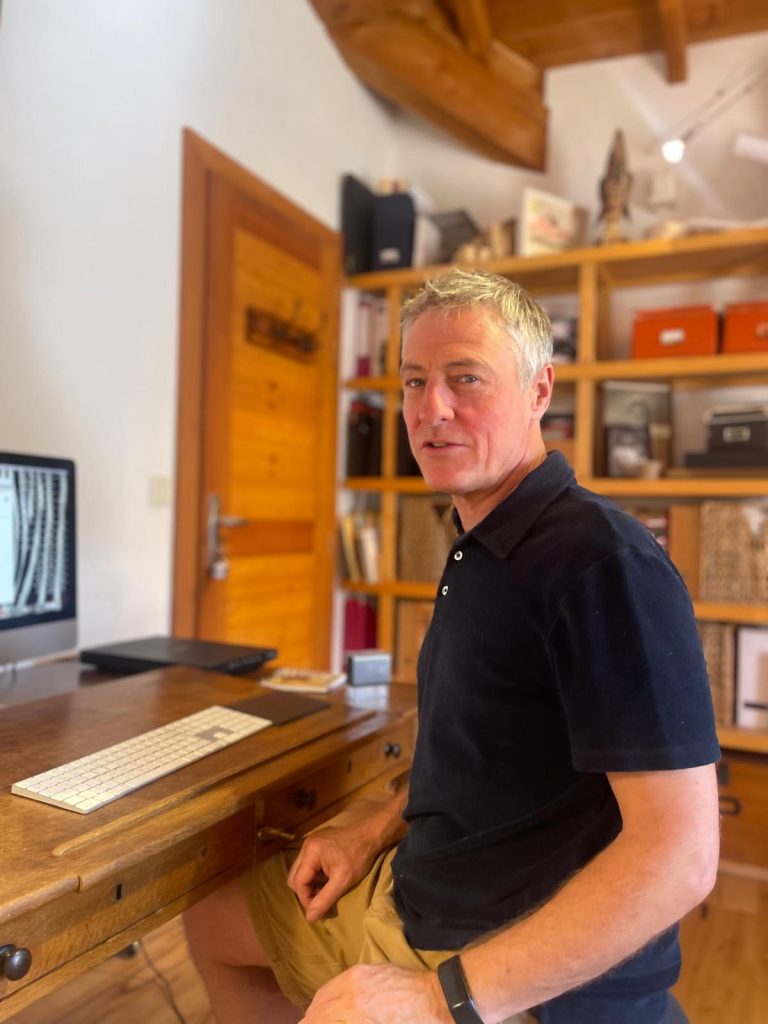
Over Thirty Years of Clinical Experience

For over thirty years, Leo Meyer has worked with children and adults experiencing developmental, learning, behavioural and chronic health difficulties.

After graduating from the College of Osteopaths in London in 1999, he completed three years of supervised postgraduate clinical training at the Osteopathic Centre for Children.

He later gained a postgraduate diploma in Neuro-Motor Immaturity (INPP) and undertook specialist training in Orofacial Myofunctional Therapy in the United States.

Throughout his career, Leo has combined clinical practice, postgraduate study and multidisciplinary collaboration to develop an integrated approach that helps individuals and families better understand complex developmental and health challenges.

More About Leo
BEGIN THE PROCESS

A Clearer Understanding Starts Here

Complete the short initial questionnaire and Leo will review your responses for free. You will then be contacted to plan the next steps. Consultations are available online worldwide and in person in London where appropriate.